Jump-start a dead battery safely
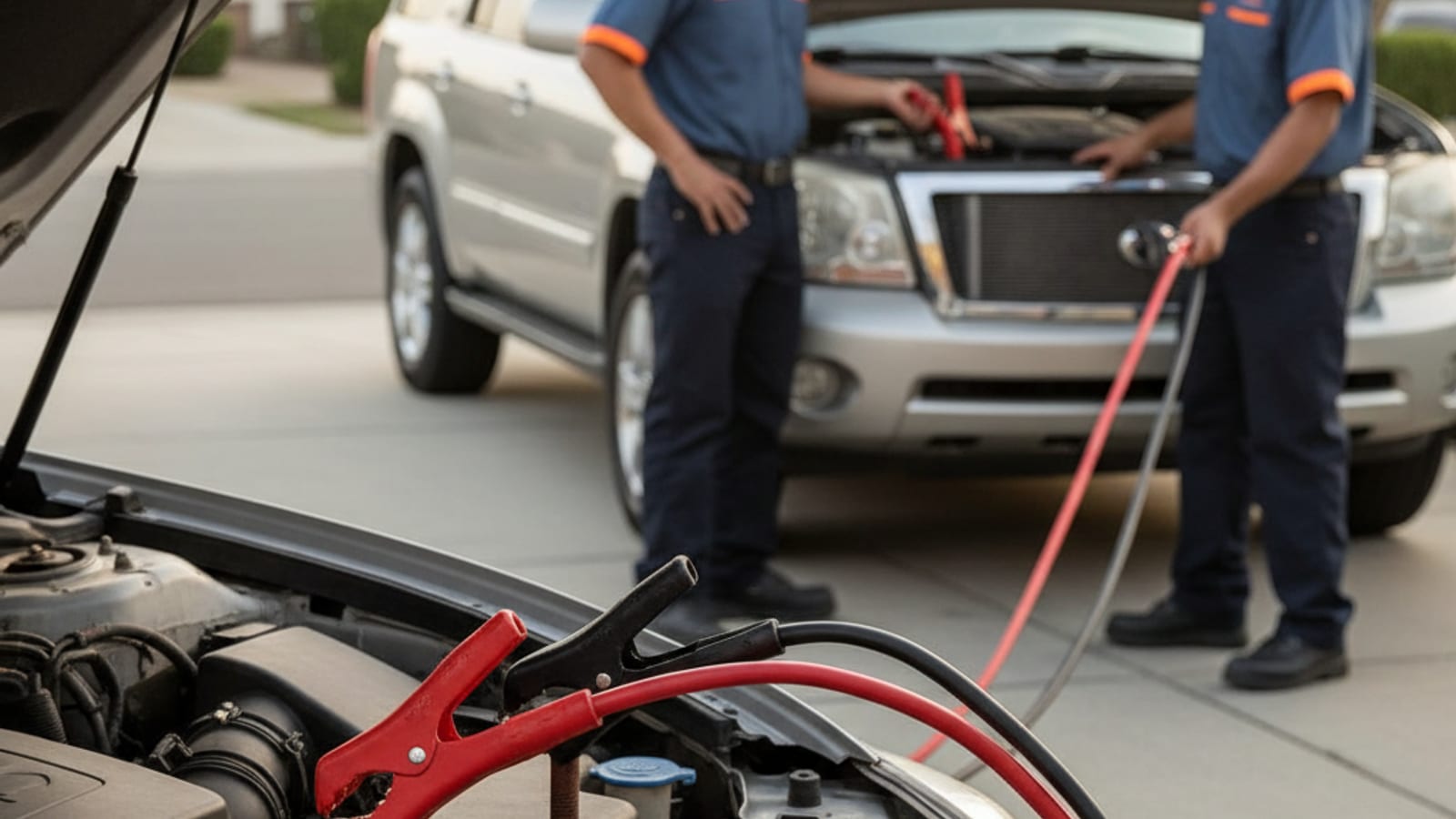
Jumper cables are simple until you hook them wrong. Do it right and you'll avoid sparks, ruined electronics, and a tow you didn't need.
What you'll learn
- The correct red-then-black clamp order (and why it matters)
- Why the last clamp goes on a bare metal point, not the dead battery
- When a jump-pack beats a cable-to-cable jump
- Signs that the alternator is bad and a jump will not fix the car
Step by step
- Pull the donor car close enough for the cables to reach. Both cars OFF.
- Clamp RED to POSITIVE (+) on the dead battery.
- Clamp RED to POSITIVE (+) on the donor battery.
- Clamp BLACK to NEGATIVE (−) on the donor battery.
- Clamp BLACK to bare metal on the dead car's engine block (not the battery).
- Start the donor. Wait 2 minutes. Start the dead car. Let run 10 minutes before driving.
If the car cranks weakly or dies again within an hour, the alternator or battery has failed. A second jump will not help - call for a tow to a shop. Memphis batteries take a beating from both ends of the year: a hard ice storm like February 2022 is often when a battery that limped through fall finally gives out, and months of 90-degree summer heat cook a battery's plates faster than most drivers expect. A battery past its third summer here is a common culprit.
Rather have a pro handle it?
Towing and roadside service across the Memphis metro. One local line, taking calls 24/7.
Keep learning.
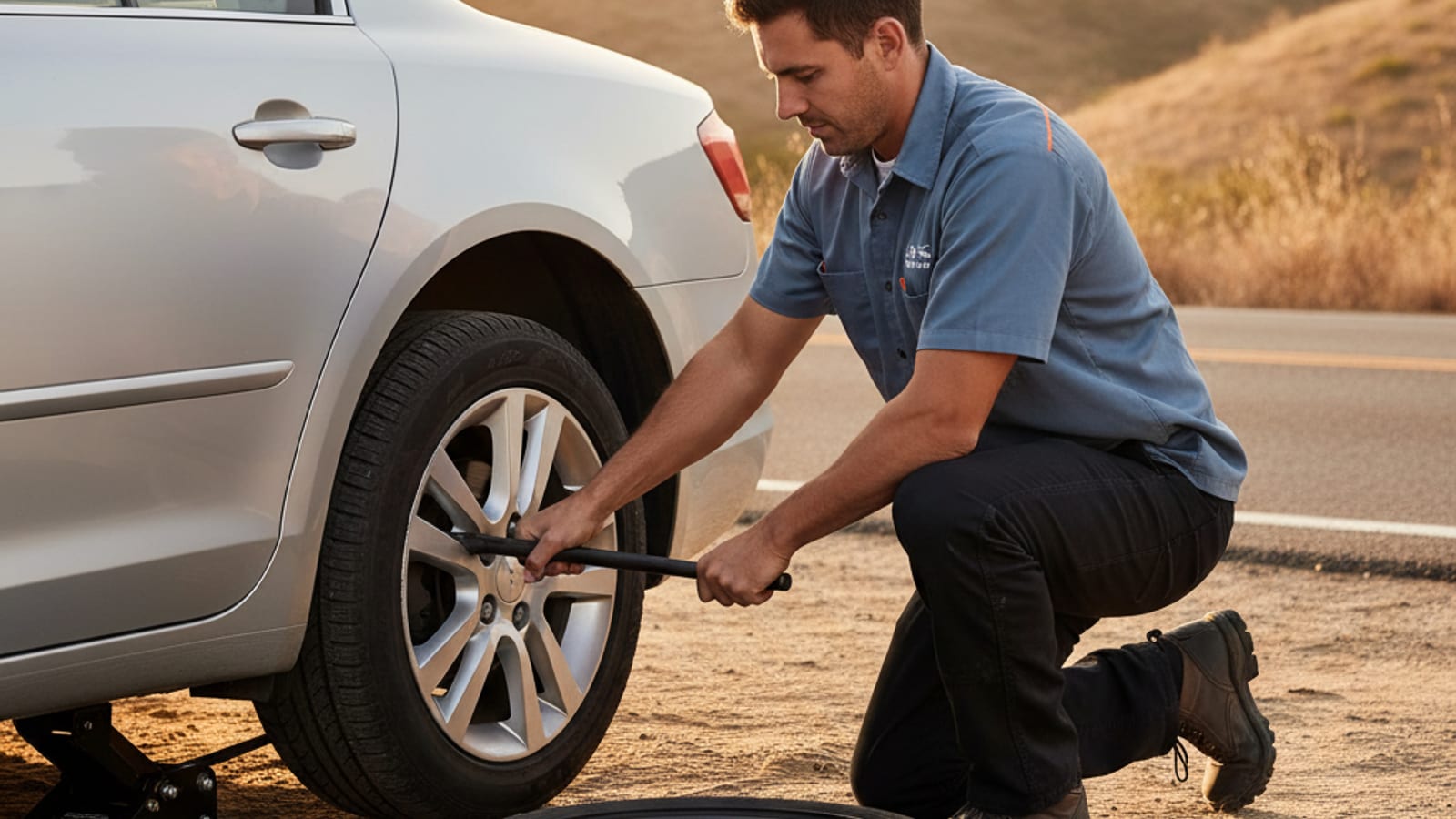
Change a flat tire on the side of the road
The difference between a 20-minute shoulder stop and an hour on the phone with a tow company is knowing where the spare and jack live before you need them.
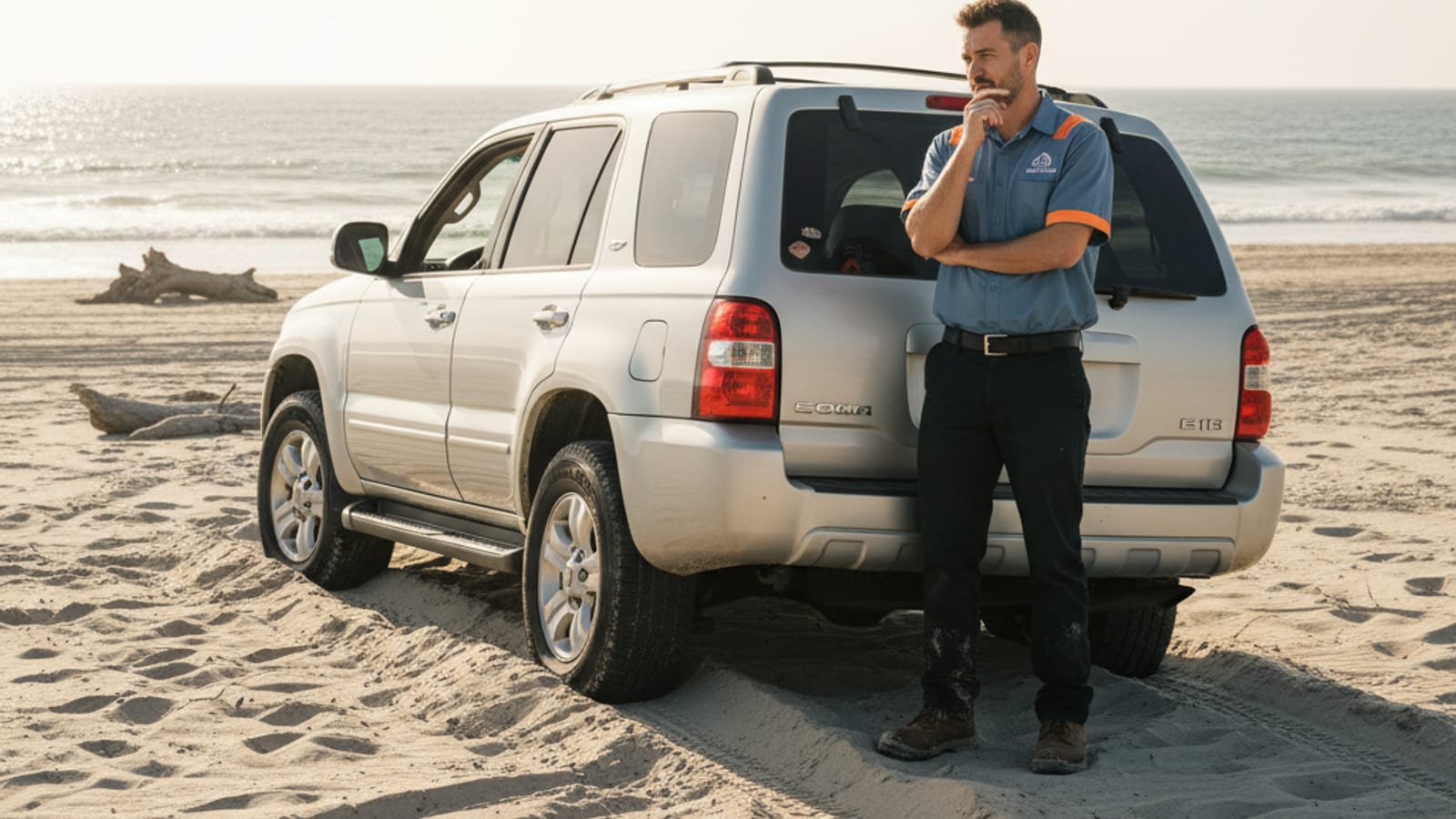
What to do when your car slides on ice or floods out
Memphis ice storms glaze bridges and roads fast, and the Mississippi's flood history makes high water a real seasonal risk. First step: stop making it worse.

Prepare your vehicle for a tow
A few minutes of prep before the tow truck arrives saves time, avoids damage, and makes the whole call go faster.